Stemtree of Spring TX: Engaging STEM Activities for Kids
When I first walked into a Stemtree classroom in Spring, Texas, the air hummed with the quiet chatter of curious minds. Not the buzzing excitement you hear in a gym when a game ends, but a steady, focused energy that comes from kids who have found a problem they actively want to solve. The kind of energy that tells you you’re in the right place where learning feels like a series of experiments, not lectures. Over time, I watched how families factor time into their schedules, how instructors balance rigor with play, and how a single hands-on moment can flip a child’s entire relationship with STEM from something they do because they have to to something they do because they want to.
Stemtree of Spring TX isn’t just a series of classes buried behind a logo. It’s a system designed to meet kids where they are and then nudge them toward what they can become. In this part of Texas, we’re lucky to have regular access to programs that blend real-world applications with the kind of thoughtful pedagogy you hope to find in a school setting yet seldom see. The result is an ecosystem where inquiry and persistence are the built-in tools, not optional features. What follows are reflections drawn from classrooms, families, and students who learned to see science, technology, engineering, and math as a way of thinking rather than a collection of facts to memorize.
A natural starting point is to understand the philosophy behind Stemtree’s Spring offerings. The approach hinges on small groups, safe experimentation, and a curriculum that scales with a child’s curiosity. If a learner wants to push into robotics, the program can grow with them, introducing concepts of sensors, feedback loops, and programmatic thinking. If a child is more drawn to pure math, instructors can bend the same framework toward logic, pattern recognition, and problem framing. The core idea is simple on the surface and surprisingly rich in practice: give kids time to tinker, frame the problems clearly, and then encourage them to iterate with a steady cadence of feedback. In the process, kids acquire a vocabulary for thinking, not just a vocabulary for exams.
What that looks like in the classroom is a balance between guided exploration and structured skill-building. I’ve seen lessons where a teacher presents a real-world scenario, such as designing a simple water filtration system or building a small bridge out of everyday materials. The kids begin with questions, sketching what they think will work, and then build. They test. They measure. They revise. The teacher moves among groups with just-in-time questions: What happens if the flow rate changes? How does the load affect stability? Where can you reduce waste while maintaining performance? The shift from “do this task” to “solve this problem” is sometimes invisible to the adults, but the kids feel it as a growing sense of agency. They learn to state a hypothesis, devise a plan, reflect on why a result happened, and adjust their approach accordingly.
One of the most compelling aspects of Stemtree in Spring is how the programs pull in different disciplines while maintaining a coherent thread. Rather than siloed modules, the courses weave math, science, engineering, and technology into projects that require cross-disciplinary thinking. A group might be tasked with developing a small autonomous rover. They need an algorithm that guides motion (coding), an understanding of friction and materials (physics and engineering), a way to interpret sensor data (data interpretation and statistics), and a presentation that makes their design choices legible to others (communication). The result is a kid who isn’t just good at solving a math problem or writing a code snippet; they grow comfortable moving across domains, translating ideas from one language to another, and making decisions with imperfect information.
In my experience, the most meaningful learning happens when students confront ambiguity and still find a path forward. Stemtree’s instructors don’t shortcut the complexity. They ask students to justify their decisions, not merely to arrive at the correct answer. That approach mirrors real-world engineering and research work, where success is often about making solid trade-offs rather than chasing a perfect solution. The kids learn to quantify risk, identify constraints, and anticipate unintended consequences. These are the sorts of cognitive muscles that pay dividends far beyond a single unit on a test.
The community facet should not be underestimated. Families often find themselves co-constructing a learning journey with the instructors. The programs welcome questions from parents who want to understand the pedagogy behind a challenging activity. In turn, parents gain a window into what their child is capable of when given time and trust. The sense of partnership is not accidental. It grows out of deliberate communication about goals, progress, and the kind of feedback that moves a learner from competence to confidence.
Part of what makes Stemtree's Spring offerings so resilient is how they adapt to the seasonal rhythm of families. Spring, with its longer days and a pace that invites outdoor exploration, lends itself to project-driven activities that can extend beyond the classroom. A project might begin with a simple question on a Tuesday and blossom into a multi-week investigation that spills into the home, the park, or the neighborhood. In this way, the program becomes less about closing a unit and more about inviting a habit: curiosity as a daily practice.
The practical, day-to-day realities of participating in stem programs for kids in Spring TX also reveal how thoughtfully designed these experiences are. Families juggling after-school commitments want programs that are reliable, engaging, and efficient with time. Stemtree delivers with consistent schedules, clear expectations, and a culture that respects the learners’ time and energy. Instructors arrive with well-prepared activities that require minimal setup. They carry the confidence that a five-minute opening prompt can unlock a student’s room for creative experimentation. And when the session ends, the clean transition back to daily life feels almost seamless, as if the day had folded into a larger, more purposeful curiosity about the world.
The breadth of Stemtree’s offerings lets families align their investment with their child’s interests and strengths. Some kids lean into engineering classes for kids, where the emphasis is on design thinking, prototyping, and the iterative testing that engineers rely on. Others dive into technology classes for kids, exploring programming concepts, digital fabrication, and the way software interacts with hardware. For students who crave mathematical rigor, the math tutoring components offer a bridge from classroom arithmetic to algebraic reasoning, statistics, and problem-solving strategies that feel like a natural progression rather than a detour. And for those who want a more exploratory, science-forward path, science classes for kids open doors to chemistry experiments, physics investigations, and hands-on biology that keeps the lab bench warm with curiosity.
In one family’s experience, a child who initially struggled with reading directions found a new language in STEM. The hands-on tasks gave her a reason to keep up with the pace of the group, translating steps into actions, and then back into words when she explained her plan to the team. The improvement wasn’t measured merely by test scores or a rubric alone; it was visible in the way she approached problems at home, the way she explained processes to siblings, and how she began to anticipate what questions might come next in a task. That is the kind of downstream impact that makes the investment in STEM education feel not only worthwhile but deeply meaningful.
If you’re contemplating whether Stemtree is the right fit for a child in Spring TX, consider the kinds of questions you’d ask if you were interviewing a potential after-school program. Does the instructor know how to tailor challenges to a child’s current level while maintaining a healthy stretch zone? Are projects designed to reveal both the elegance and the messiness of real-world problem-solving? Is there a clear path from beginner projects to more advanced, independent work? Does the program encourage kids to articulate their thinking, not just produce the correct solution? The answers I’ve heard from families and observed in classrooms consistently point toward a program that respects the intelligence of kids and treats their curiosity as a resource to be nurtured, not a problem to be managed.
The day-to-day experience of a Stemtree class often unfolds with a rhythm that feels intimate yet ambitious. The opening activity is typically a short, hands-on prompt that invites observation and hypothesis. stemtree spring Students jot ideas, sketch diagrams, or map out a plan on a shared board. Then the group tests a solution, records data, and discusses what the results mean. The discourse is lively but respectful, with students listening as much as they speak, learning to defend a stance with evidence, and learning to revise a plan in light of new information. The instructors guide with pointed questions and with generous patience, offering just enough scaffolding to keep the work moving forward without stifling curiosity.
Outcomes from these experiences aren’t all quantifiable. There’s a durable shift in mindset that emerges when children see themselves as capable investigators. They start to notice problems in their daily lives that could be tackled with STEM thinking: a leaky faucet seen as a systems challenge, a game with a faulty mechanism that invites a redesign, a neighborhood issue that could be explored through data collection and analysis. The change isn’t about turning kids into engineers overnight; it’s about giving them a repertoire of approaches they can borrow and adapt. In the long arc, that repertoire translates into more confident collaboration, clearer communication, and a stronger sense of agency in both schoolwork and personal projects.
Let’s pivot to a practical map for families who want to maximize the benefit of Stemtree’s offerings. Engaging with stem programs for kids isn’t a one-size-fits-all endeavor. It requires alignment between a child’s temperament, interests, and the structure of the activities. Some days, a child will thrive in a fast-paced, project-driven session where multiple teams wind their way toward a shared objective. Other days, a quieter, more methodical session might be exactly what a learner needs to consolidate new concepts. The key is flexibility in expectations and consistency in participation. The more a family commits to regular attendance, the more the child’s learning curve benefits from the accumulation of well-spaced experiences, feedback loops, and progressive challenges.
Here is a practical pathway that often yields durable engagement without burning out a young learner:
- Start with a low-friction introduction. A single project or club that aligns with current interests helps a child develop a sense of belonging in the community.
- Build a cadence, not just a schedule. Consistent weekly sessions provide the momentum needed to move from passive participation to active problem solving.
- Tie school life to the Stemtree work. Ask the child to reflect on how a concept learned in class appears in the project you’re completing and vice versa.
- Encourage documentation of thinking. A simple habit of sketching, diagramming, or short notes about decisions helps cement reasoning and provides material for parent discussions with instructors.
- Celebrate process as well as product. Highlight the courage to test ideas, the tenacity to iterate, and the insight gained from a failed approach as much as a successful outcome.
These steps are not a guarantee of instant mastery, but they create a durable practice. The kind of practice that compounds over months and years, turning curiosity into competence and then into a confident, adaptable approach to whatever life throws at a child.
The landscape of stem education has evolved in the last decade, and Stemtree’s Spring TX offerings sit squarely in the middle of that evolution. They leverage the best of hands-on learning, structured skill development, and a community-centric model to create experiences that feel both accessible and ambitious. The family who shows up regularly notices subtle shifts: a child who asks better questions, a teenager who can break a messy problem into manageable pieces, or a younger student who finally sees how a set of numbers can tell a story rather than just compute a result. The most enduring impression isn’t a single spectacular project; it’s the discipline of thinking well in a world where problems arrive in unpredictable forms and the right approach is often a blend of rigor, empathy, and curiosity.
Two features of Stemtree that consistently stand out, and that I’ve seen repeatedly drive positive outcomes, deserve a closer look. First is the emphasis on iterative design coupled with reflective practice. Students aren’t asked to pretend perfection exists before they begin; they are asked to start with a hypothesis, build a prototype, test it, and then articulate what worked and what didn’t. The second is the scaled support offered by skilled coaches who know how to push a group toward deeper questioning without dropping the safety net of guidance. This combination creates a learning environment where kids learn not only to solve problems but to own the process of solving them.
A note on accessibility matters. Spring TX is home to families with a broad spectrum of resources and schedules. Stemtree’s approach is mindful of this diversity. The programs are designed to be affordable in the long run, and the scheduling is structured to minimize conflict with school commitments and family activities. In practice, this means options for after-school sessions, weekend workshops, and occasional holiday camps that fit a child’s rhythm. It also means instructors who can adapt to varying levels of prior exposure to STEM material, meeting learners where they are and guiding them toward progressively more challenging work without ever making them feel outpaced.
For families who want to see what a typical week looks like, here is a glimpse into a sample cycle that captures the rhythm of a Stemtree experience in Spring TX. A group might begin with a five to eight minute warm-up that invites students to observe a phenomenon, such as how different materials respond to heat. The next phase is a guided exploration in which teams brainstorm possible explanations, sketch diagrams, and select a plan for testing. The middle portion of the session might involve building and testing, with a rotating set of roles that ensure every student develops a hand in the design. Toward the end, teams present their findings in a concise format, comparing results, acknowledging uncertainties, and identifying next steps. The closing moment is a reflective discussion, where instructors call attention to the cognitive moves that made the work possible, such as articulating assumptions, choosing a measurement approach, or revising a hypothesis in light of data.
The broader impact of Stemtree’s approach also reveals itself in subtle, everyday ways. A child who learns to measure, estimate, and compare outcomes becomes more precise in other subjects. Reading comprehension benefits from the habit of summarizing experimental methods and results, which is often easier to transpose into narrative writing or scientific reporting. Collaboration skills sharpen as learners articulate their reasoning to teammates, listen to alternative viewpoints, and negotiate technical decisions in a respectful, productive manner. And perhaps most important, a sense of curiosity becomes a trusted companion, something a child returns to not because a parent or teacher demanded it but because the activity itself proved to be a meaningful, enjoyable pursuit.
In considering the long arc of a child’s education, the value of early and sustained STEM engagement cannot be overstated. The ability to frame problems, test ideas, and communicate results across contexts is a foundational asset for any future field. Engineering classes for kids, math tutoring, science classes for kids, and technology classes for kids each contribute a different lens through which to view the world. When integrated thoughtfully, they form a resilient scaffold that supports both academic success and practical, everyday problem solving. For families in Spring TX, Stemtree offers a bridge between curiosity and competence, a path that respects a child’s pace while inviting them to push a little further each term.
The practical question remains: how do you know if Stemtree is delivering value for a given child? In my experience, the clearest indicators are twofold. First, you’ll notice a shift in how the child talks about problems. They speak about trade-offs, constraints, and experiments with a tone that signals ownership rather than passive compliance. Second, you’ll observe a measurable uptick in the quality of questions they pose, the quality of their explanations, and the consistency of their follow-through. These early signals may be subtle, but they tend to grow with time when the program is well aligned with a child’s interests and when families participate as partners rather than observers.
If you’re ready to explore Stemtree more deeply, there are practical steps you can take to begin the conversation with your child and your local Stemtree location. Start by visiting the website to review the current catalog of offerings. Look for projects that match your child’s interests, whether that’s building, programming, or exploring the natural world through experiments. Call or email the local team to ask about how they tailor activities to different age groups and experience levels. Ask about visit days or trial sessions, which provide a low-stakes way to gauge fit. And finally, talk with your child about what kind of projects feel exciting and what they’d want to learn next. The most successful engagements begin with a shared sense of possibility and grow from there, one project at a time.
Two concise portraits illustrate how Stemtree’s methods resonate differently across ages and personalities. In one case, a seven-year-old who loved dinosaurs found an accessible entry into STEM through model-building and data collection about fossil discoveries. The project started with a story the child could relate to, then unfurled into measured experimentation with simple tools, graphs, and gentle comparisons. The child’s confidence grew as they learned to explain their reasoning to adults and peers, and to update their thinking when new evidence emerged. In another case, a fourteen-year-old with a natural aptitude for systems thinking gravitated toward robotics and coding. They enjoyed the autonomy of designing a control loop and the tangible feedback of watching a robot respond to their software. In both scenarios, the core driver remained the same: a meaningful problem, a structured yet flexible framework, and mentors who believed the child could navigate the challenge.
The journey of discovery is rarely linear, and Stemtree’s Spring TX environment understands that nuance. The most successful learners are the ones who can tolerate a certain level of discomfort—the moment when a plan doesn’t work and a new approach must be tried. This discomfort is not punishment, but a training ground for resilience. It’s here that kids grow a reliable instinct: learning is not about getting everything right the first time; it is about learning what to change and when to change it. When families witness this progression, it rarely looks dramatic, but the cumulative effect is undeniable: a more versatile, curious, and capable child.
To close on a note that honors the lived reality of families, I want to acknowledge the practical constraints that shape decisions about after-school activities. Time is finite, and energy fluctuates through the week. Transportation can be a hurdle, and costs must be weighed against the size of a family’s budget. Yet the value of investing in a program like Stemtree often reveals itself in small, non-linear ways. A child who returns home from a session with a new question to ask at the dinner table, or who brings home a prototype and a three-sentence explanation of their design, carries a gift that no test score can fully capture. These moments accumulate into a richer, more capable approach to learning that extends beyond the walls of the classroom.
In the end, Stemtree of Spring TX represents more than a brand or a set of classes. It is a living practice of curiosity that acknowledges where young minds are and gently expands their landscape of possibility. The emphasis on collaboration, iterative design, and explicit reasoning builds a foundation that supports students as they grow into adults who can navigate complexity with clarity and creativity. For families, teachers, and communities looking to cultivate a durable love of STEM, the Spring TX programs offer not merely content but a framework for thinking. And in a world where the pace of change keeps accelerating, that framework might be the most valuable gift of all.
Getting involved is simple, and the return is often immediate in the sense that learners become more engaged, more confident, and more connected to a community that values thoughtful problem solving. If you’re curious, take a close look at what Stemtree’s Spring TX programs can offer your child. You may find that the right project at the right time can unlock a way of thinking that serves them for years to come.
What makes Stemtree different in Spring TX
Stemtree’s approach in Spring TX centers on a few core commitments that consistently translate into meaningful outcomes for kids. First, the emphasis on exploration with structure. Kids are invited to explore ideas freely, but a well-tuned scaffolding ensures they stay orientated toward learning goals. In practice, this means clear expectations around what constitutes a good question, how to design a test, and how to interpret data. The result is a learning culture that respects curiosity while maintaining a rigorous standard for thinking.
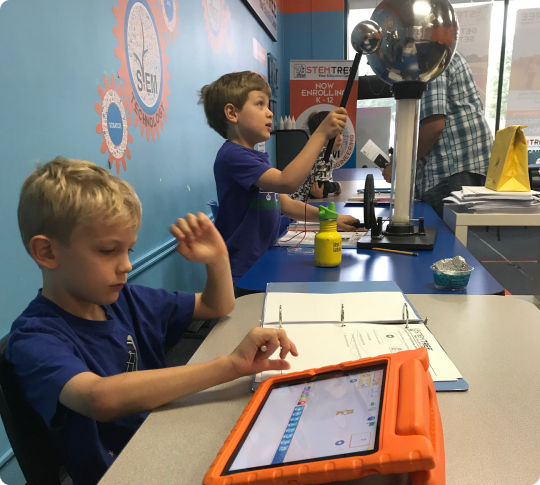
Second, the integration of disciplines. When math, science, engineering, and technology converge in a single project, students see the practical connections between ideas that might otherwise feel abstract. A rover project does not ask simply to code a path; it asks students to consider sensor input, mechanical design, energy budget, and the ethics of automation. The cross-pollination of skills is what produces learners who can transfer what they know from one context to another, a hallmark of adaptive thinking.
Third, a community-driven model. Instructors, families, and students co-create the learning journey. Instructors provide the scaffolding and the feedback; families contribute context about a child’s interests and goals; students drive the daily curiosity that powers progress. This triad fosters accountability without pressure, collaboration without competition, and learning that feels personal rather than performative.
Fourth, a practical, age-appropriate progression. The Spring TX program recognizes that children arrive with different starting points. A five-year-old might be guided into simple construction and basic cause-and-effect reasoning, while a twelve-year-old can tackle more sophisticated coding challenges and systems design. The curriculum scales to ensure each learner experiences an appropriate level of challenge that keeps them moving forward without becoming overwhelmed.
Fifth, a results-oriented yet humane evaluation approach. Rather than relying solely on tests, Stemtree’s assessment framework emphasizes portfolio development, demonstration of reasoning, and the ability to reflect on one’s own work. This aligns with how real-world professionals think and communicate, and it helps kids learn to articulate their ideas with clarity and confidence.
Two go-to checklists summarize essential aspects families might consider when evaluating programs like Stemtree. They’re short enough to be practical, yet robust enough to capture what matters in a meaningful STEM education experience.
-
Getting involved
-
Identify a project that matches your child’s enthusiasm
-
Check the weekly schedule and confirm consistency
-
Ask about the instructor-to-student ratio
-
Inquire about trial sessions or observation opportunities
-
Review how progress is communicated to families
-
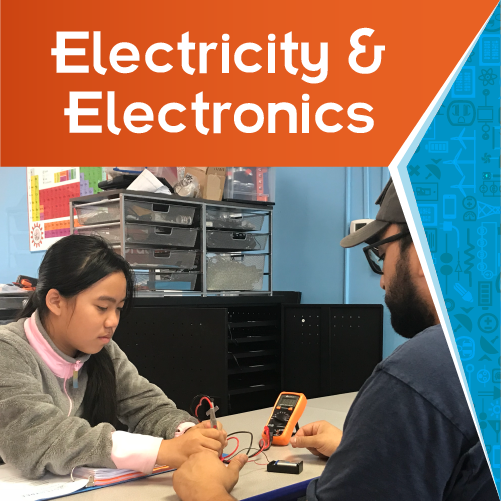
What to expect from a strong program
-
A balance of guided exploration and independent problem solving
-
Clear expectations for thinking, testing, and communicating results
-
Opportunities to work across math, science, engineering, and technology
-
Regular, constructive feedback focused on growth
-
A welcoming, collaborative environment for families and learners
If you’re weighing Stemtree against other local options, a few edge cases are worth noting. Some families find that the most meaningful growth occurs when a child participates in multiple disciplines over time rather than specializing in a single track too early. Others see value in a concentrated stretch of weeks on a specific project, followed by a lighter maintenance phase to consolidate learning. And there are moments when a child’s natural temperament requires longer periods of observation before diving into complex tasks. Stemtree’s flexibility, in practice, often accommodates these realities through a mix of programs and scheduling options.
The narrative of Stemtree in Spring TX is not a single, tidy story. It’s an ongoing conversation among educators, families, and students about how to cultivate curiosity, how to frame problems, and how to celebrate progress that happens through persistent, hands-on effort. The programs are designed to be more than a place to pass time after school. They are a habitat for thinking with intention, for seeing connections where others might see only contrasts, and for building the kind of confidence that grows with every small experiment, every shared insight, and every revision that follows a failed attempt.
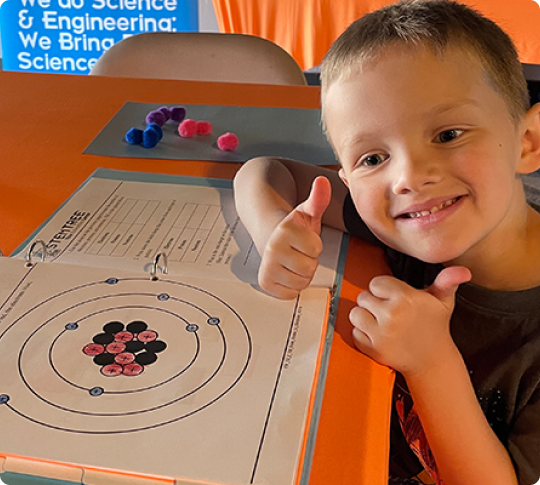
For families who want to take the next step, the invitation is straightforward. Explore the offerings, visit a class if possible, and have an open conversation about your child’s interests, strengths, and goals. If the fit is right, you’ll likely observe a child who arrives a little anxious about a challenge and leaves a little more certain that they can meet it. The transformation is rarely instantaneous, but it is real, measurable, and enduring.
In a sense, Stemtree’s Spring TX programs mirror the season itself.春—blooming with possibility, the landscape shifts as longer days invite renewed experimentation. The work of growing a curious mind is not glamorous in every moment, but it is steady, meaningful, and profoundly human. If there is a through line to these programs, it is this: given time, guidance, and the freedom to test ideas, a child discovers that their own mind can be a powerful tool for understanding the world around them.
As you consider STEM education options for your child, think of Stemtree as more than a class roster. See it as a scaffold for creative problem solving, a community that treats questions with respect, and a pathway toward skills that serve children well into adolescence and beyond. The Spring TX chapters of Stemtree embody a practical ideal: learning as an active, collaborative, and iterative process that makes a tangible difference in how a child thinks, learns, and engages with the world.
Getting to know Stemtree in Spring TX means seeing the way a room of kids can transform a challenging problem into a shared journey. It means watching a teenager discover the elegance of a clean algorithm while explaining it to a younger student with surprising clarity. It means hearing a parent say that their child now approaches tasks with a plan rather than a sigh of resignation. It means recognizing that the true payoff of STEM education is not just a good grade, but the confidence to pursue a question further, to persist when a project stalls, and to celebrate the small, stubborn wins that accumulate into a durable habit of mind. In that sense, Stemtree in Spring TX is not just teaching science and math; it is teaching a way of thinking that makes all kinds of learning richer and more resilient.